

Views: 0 Author: Site Editor Publish Time: 2026-07-15 Origin: Site


High-value biologicals demand absolute precision and zero margin for error. A single temperature excursion can ruin vaccine efficacy entirely. Such events trigger harsh regulatory penalties and massive financial losses. Today, regulatory bodies tightly enforce modern storage mandates. Agencies like the CDC continuously update their compliance requirements. They make selecting purpose-built cold storage a mandatory practice. It is no longer just a secondary operational choice. You must protect your inventory proactively.
Securing the right vaccine freezer requires evaluating much more than cooling capacity. You must assess absolute temperature stability across all conditions. Specifically, we will explore spatial uniformity and rapid recovery times. We will also cover essential audit-ready data tracking systems. You will learn how to navigate compliance risks successfully. We also detail the specialized needs of modern biologicals. Proper selection ensures your facility stays compliant and your patients remain safe. You will discover actionable evaluation frameworks below. These frameworks empower procurement teams to make informed decisions easily.
Stability over cooling: True temperature stability requires spatial uniformity (no hot/cold spots) and rapid recovery after door openings.
Compliance is non-negotiable: Purpose-built medical freezer equipment is mandated by the CDC and VFC (Vaccines for Children) programs; residential or standard commercial units expose clinics to unacceptable risk.
Advanced biologics dictate specs: mRNA vaccines and specialized biologics often require ultra-low temperature capabilities with distinct stability profiles.
We must understand the severe consequences of improper cold storage. Clinics face immense risks when equipment fails to maintain temperatures. You cannot afford to underestimate these hidden liabilities.
Discarding compromised vaccine inventory creates direct financial devastation. A single tray of specialized vaccines often costs tens of thousands of dollars. Manufacturers refuse to refund clinics for improperly stored vials. You bear the entire financial burden alone. This sudden loss drains clinic budgets instantly. Insurance policies frequently deny claims tied to improper equipment usage. Facilities must absorb these catastrophic costs independently.
State health departments conduct rigorous compliance audits frequently. The CDC mandates strict adherence to cold chain guidelines. Failing an audit brings immediate and severe consequences. Agencies can suspend your facility from VFC programs permanently. You lose access to essential public health resources. Compliance requires verifiable proof, not just good intentions. Auditors demand comprehensive historical data to verify stability.
Compromised vaccines present a hidden and dangerous threat. A degraded vial often looks completely normal to practitioners. Administering these degraded doses jeopardizes patient safety directly. The patient receives no immunological protection. Later, you must contact affected individuals for immediate revaccination. This process destroys their trust in your healthcare facility. Community reputation suffers irreparable damage after such events.
Best Practices for Risk Mitigation:
Designate one primary vaccine coordinator daily.
Appoint a backup coordinator for emergency coverage.
Review temperature logs at the start of every shift.
Establish written protocols for emergency inventory relocation.
Cooling capacity simply measures how cold a unit gets. Temperature stability measures how consistently it stays there. You must evaluate three crucial performance metrics carefully.
Every single inch of the cabinet must maintain exact temperatures. Standard units often develop dangerous hot and cold spots. The back wall might freeze inventory completely. The door area might remain too warm. Superior units distribute chilled air evenly across all shelves. This uniformity protects vials regardless of their physical placement. You eliminate the risk of freezing delicate adjuvants entirely.
Clinical environments experience high traffic daily. Staff members open unit doors repeatedly during busy shifts. Warm ambient air rushes inside instantly. The internal temperature spikes rapidly. You must evaluate how quickly the system recovers. Purpose-built units stabilize the internal climate in mere minutes. Slow recovery times leave biologicals vulnerable to prolonged heat exposure. Fast recovery protects inventory during peak vaccination seasons.
Compressors cycle on and off to maintain cold environments. This mechanical action creates natural temperature fluctuations. We call this peak variation or thermal cycling. Precise microprocessor controls minimize these cyclical swings effectively. They keep variations within strict plus-or-minus tolerances. Intelligent sensors predict temperature drops before they become critical. This proactive adjustment prevents dangerous thermal waves entirely.
Common Mistakes to Avoid:
Do not place inventory directly against the back wall.
Avoid storing vaccines in the door bins.
Never leave the cabinet door open while logging inventory.
Do not block internal fan vents with large boxes.
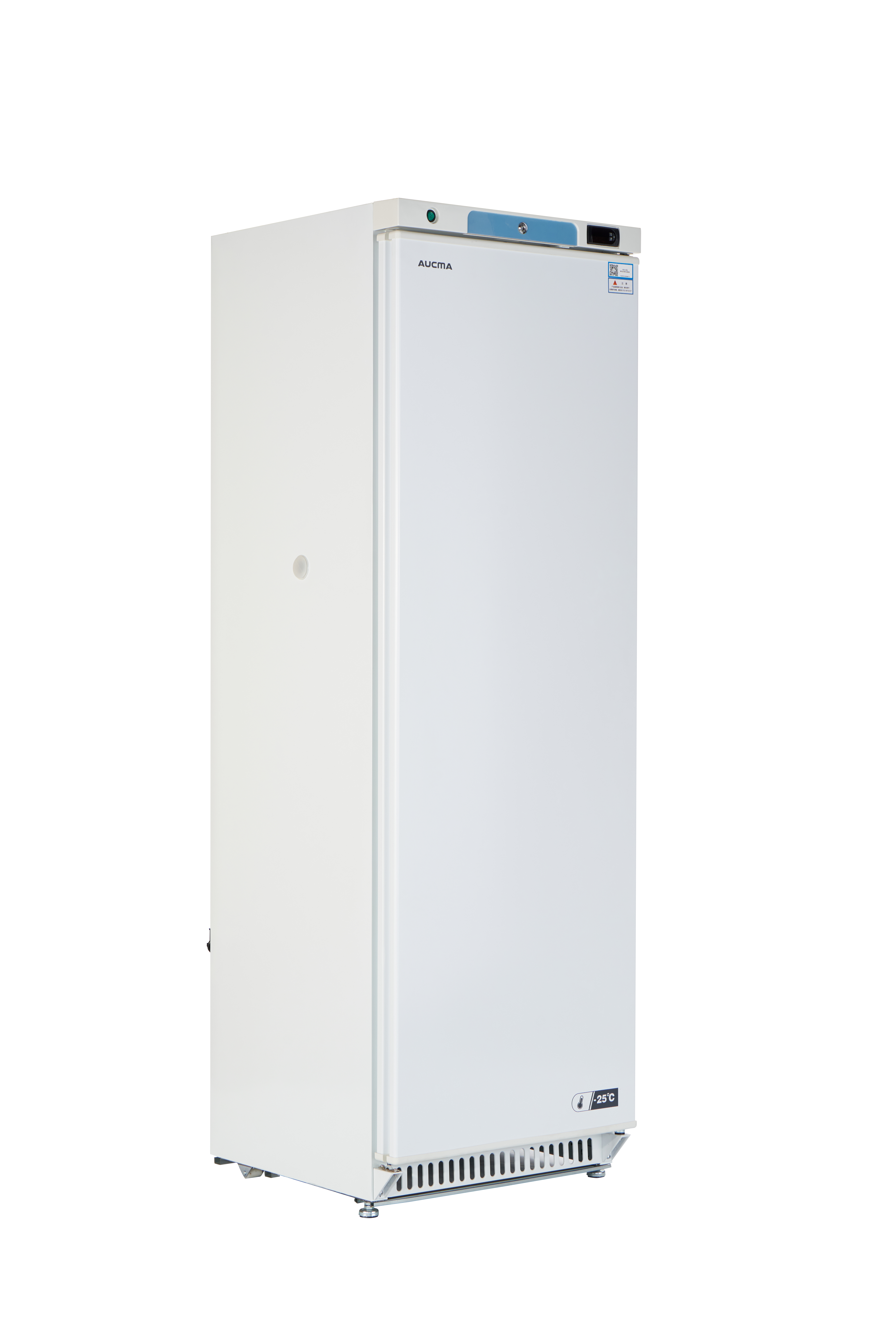
Many clinics still mistakenly use consumer-grade appliances. The industry refers to them as dorm-style units. You must recognize their inherent dangers immediately.
The CDC explicitly prohibits standard residential units for biological storage. They also ban commercial food-grade refrigerators. These units utilize unreliable cold plates. They exhibit massive temperature swings during normal operation. Using them exposes your clinic to unacceptable liability. Regulatory bodies will penalize facilities utilizing consumer-grade appliances. You must remove them from clinical settings immediately.
Standard systems rely on passive cooling methods. Cold air simply sinks to the bottom naturally. Purpose-built medical freezer equipment operates very differently. It utilizes powerful forced-air circulation systems. Internal fans push chilled air continuously throughout the chamber. This active airflow prevents thermal stratification. It maintains absolute stability across every single shelf. Forced air guarantees uniform conditions constantly.
Medical-grade units feature intelligent built-in safeguards. Standard units use basic heating coils for automatic defrosting. These coils spike internal cabinet temperatures dangerously during cycles. Medical systems utilize advanced defrost protocols instead. They manage internal frost without warming the primary storage compartment. They also feature robust physical locks and battery backups. These additions protect your inventory around the clock.
Standard vs. Purpose-Built Equipment
Feature | Standard Appliance | Purpose-Built Unit |
|---|---|---|
Air Circulation | Passive / Gravity-fed | Active / Forced-air |
Temperature Controls | Basic mechanical dial | Microprocessor controls |
Defrost Cycle | Heated coil (spikes temp) | Frost mitigation algorithms |
CDC Compliance | Strictly prohibited | Highly recommended |
Modern medicine introduces highly advanced biologicals constantly. These new formulations require entirely different storage paradigms. You must upgrade your infrastructure accordingly.
Traditional vaccines remain stable at standard freezing temperatures. However, mRNA formulations changed cold chain logistics permanently. Lipid nanoparticles require extreme stability to survive. Products from Moderna and Pfizer require extreme cold environments. You need a specialized low temperature freezer to store them safely. These specialized machines operate between -20°C and -80°C. Standard compressors simply cannot reach these depths.
Ultra-low systems utilize sophisticated cascade refrigeration mechanics. A single compressor struggles to achieve extreme set points. Cascade systems connect two separate refrigeration cycles together. The first stage cools the compressor of the second stage. This dual approach creates uninterrupted stability. It holds temperatures perfectly steady at -80°C. These systems provide the immense cooling power required daily.
Extreme cold generates rapid frost buildup easily. Ambient humidity turns into ice immediately upon entering the chamber. Specialized units account for this variable actively. They incorporate advanced humidity control mechanisms. This prevents heavy frost from obscuring vital vial labels. It ensures clinicians can retrieve doses quickly and accurately. Fast retrieval minimizes door-open times significantly.
What to Watch Out For: Minimize door openings on ultra-low units. Limit access to under ten seconds per retrieval. Prolonged exposure causes severe internal icing.
Procurement teams must evaluate units systematically. We recommend using this structured four-point framework. It removes guesswork from the purchasing process completely.
Always verify NSF/ANSI 456 certification before purchasing. This remains the most rigorous industry standard available. It tests a unit under strenuous real-world conditions. Testers evaluate stability with empty and fully loaded cabinets. Certified units guarantee exceptional spatial uniformity. They provide the safest baseline for medical procurement. Regulatory auditors respect this certification universally.
You must prove continuous stability during compliance audits. Ensure seamless compatibility with Digital Data Loggers. You should use a buffered probe system. Buffered probes simulate actual liquid temperatures accurately. Look for units offering cloud-based alarm integration. These systems send instant text alerts during emergencies. Real-time data prevents disastrous inventory losses.
Calculate your necessary inventory volume carefully. Never overfill your cold storage cabinet. Overloading the shelves impedes forced-air circulation drastically. Blocked airflow ruins temperature stability instantly. Keep maximum capacity below eighty percent. This leaves adequate room for proper air circulation. Factor in peak flu season inventory spikes during calculations.
Facility power failures threaten biological viability immediately. You must evaluate physical insulation ratings closely. Dense polyurethane foam slows internal warming significantly. Ensure your selected unit supports external backup batteries. Verify compatibility with dedicated emergency generator circuits. Resilience during blackouts saves your entire inventory. You must prepare for unexpected grid failures.
Temperature Stability Evaluation Matrix
Performance Metric | Target Standard | Verification Method |
|---|---|---|
Spatial Uniformity | +/- 1°C across all shelves | NSF/ANSI 456 Testing Data |
Recovery Time | Under 5 minutes | Manufacturer Validation |
Data Logging | 30-minute intervals minimum | DDL System Integration |
Temperature stability defines vaccine viability and clinical compliance completely. You must prioritize stability metrics over simple cooling capacity. Every temperature excursion risks patient safety and facility finances. Procurement teams must adapt their purchasing strategies immediately. Stop viewing cold storage as a basic utility appliance. Treat it as a critical risk-management asset instead. Proper storage infrastructure protects your community effectively.
Take action to secure your biological inventory today. We recommend conducting a comprehensive audit of your current infrastructure. Consult the latest CDC purchasing guidelines thoroughly. Contact a specialized storage consultant to evaluate your specific needs. Upgrade your equipment before your next compliance inspection. Proactive upgrades prevent costly inventory losses tomorrow.
A: Purpose-built units utilize advanced microprocessor controls and forced-air cooling. They feature strict temperature buffering to prevent dangerous excursions. These mechanisms maintain uniform conditions across every shelf. Conversely, standard residential units rely on passive cooling. They experience wide temperature swings and develop severe hot and cold spots.
A: Advanced biologics like mRNA vaccines degrade rapidly at standard freezing temperatures. Traditional units only reach -15°C to -25°C. mRNA formulations require ultra-low environments ranging from -50°C to -80°C. These extreme set points maintain their fragile molecular stability perfectly.
A: CDC compliance requires continuous monitoring protocols. You must use a Digital Data Logger equipped with a buffered probe. The system must record data no less than every 30 minutes. Staff must also perform and document manual checks daily.
A: It represents the most rigorous industry standard available today. The testing protocol evaluates a unit under extreme conditions. It verifies stability across all cabinet areas. The test covers both loaded and empty scenarios. This certification provides the safest baseline for clinical procurement.


