

Views: 0 Author: Site Editor Publish Time: 2026-06-12 Origin: Site


Every lab manager faces a critical tension daily. You must protect irreplaceable biological assets while managing strict equipment procurement budgets. You might wonder if an off-the-shelf appliance can safely store sensitive materials. Unfortunately, the reality of cold chain storage often reveals itself only after a catastrophic failure.
True cost-efficiency does not come from a cheap initial purchase. Relying on household appliances introduces severe risks. These include sudden sample loss, failed regulatory audits, and wasted labor hours. High-value materials—ranging from delicate research samples to life-saving vaccines—require absolute thermal stability to remain viable. A standard household appliance simply cannot provide this defense.
Below, we break down exactly why purpose-built cold storage differs fundamentally from consumer-grade models. You will discover the engineering gaps, hidden risks, and compliance standards driving these differences. Ultimately, you will learn how to choose the right equipment to guarantee your lab's structural integrity.
Temperature Uniformity: Biomedical freezers utilize forced-air circulation and tight compressor tolerances to prevent internal temperature stratification (hot/cold spots).
Defrost Mechanics: Consumer models prioritize frost-free convenience (which causes lethal temperature spikes); lab-grade models prioritize thermal stability.
Sensor Accuracy: Medical units use buffered probes (e.g., glycol-filled) to measure product temperature rather than volatile air temperature.
Audit Readiness: Compliance with CDC, USP, and DEA guidelines requires built-in data logging and access control—features absent in household models.
Consumer appliances operate on broad temperature deadbands. Manufacturers design them to save energy and extend compressor life. This concept is known as compressor hysteresis. In a household model, the internal temperature might fluctuate by ±3°C or more. The compressor waits for the air to get significantly warm before turning on. It then overcools the space before shutting off. This cycle creates a volatile environment. Conversely, a biomedical freezer maintains strict thermal tolerances. These enterprise units tightly control temperature variations, often holding steady at ±1°C to ±0.5°C.
Consider the operational reality of a clinical setting. Staff members open doors constantly during a busy morning shift. We call this the door-opening stress test. When you open a household freezer, heavy cold air spills out onto the floor. Warm ambient air rushes in. A consumer compressor reacts sluggishly to this sudden thermal shock. It might take hours to recover the target temperature. Purpose-built medical models handle this differently. They use microprocessor-controlled forced-air systems. Powerful internal fans instantly push chilled air throughout the cabinet the moment the door closes. This guarantees rapid temperature recovery.
Medical storage standards require extreme operational resilience. For instance, blood banks and specialized labs often mandate stringent recovery metrics. A fully loaded unit might need to maintain less than a 2°C variance within 60 seconds of a door opening. Consumer hardware inherently fails this extreme load scenario. Their compressors lack the power, and their software lacks the precision, to defend sensitive samples against rapid ambient heat intrusion.
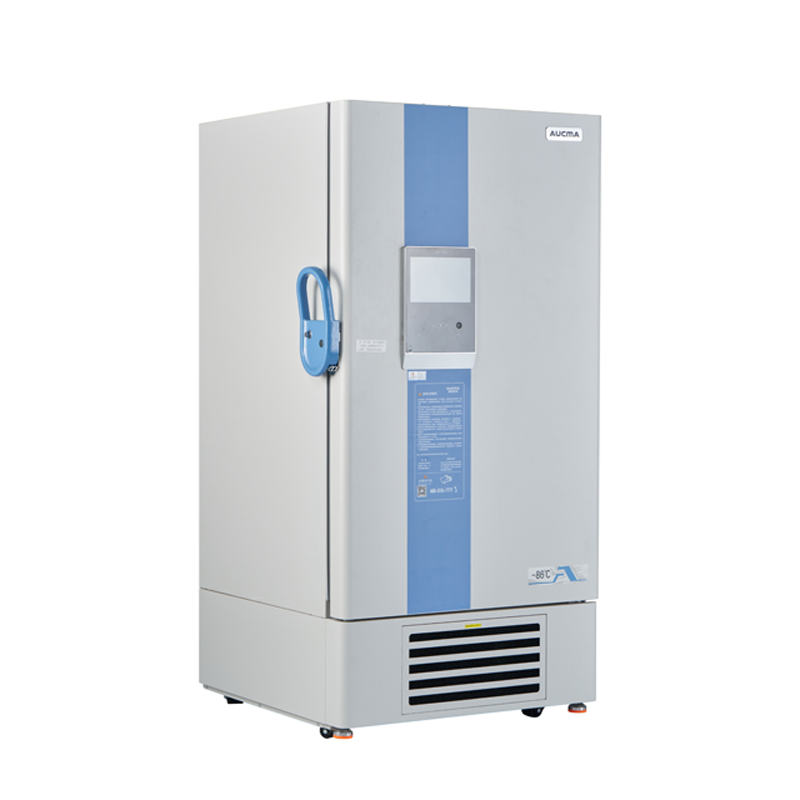
Frost management highlights a massive divide between home convenience and clinical safety. Consumer freezers typically feature auto-defrost functions. Homeowners love this because they never have to chip away ice. However, auto-defrost mechanics rely on hidden heating elements. These coils periodically heat the internal evaporator walls to melt accumulated frost. This process causes automated thermal spikes inside the cabinet. These spikes degrade sensitive biologicals over time. For laboratory integrity, manual defrost or advanced, low-heat cycle defrost systems remain non-negotiable.
Sensor placement also dictates how equipment responds to environmental changes. We can categorize sensor technology into two distinct types:
Bare-Wire Thermostats: Common in household units. They measure volatile air temperature. When you open the door, warm air touches the naked sensor. The fridge panics and overcools, risking freezing damage to nearby samples.
Buffered Probes: Standard in medical units. These probes sit inside small bottles of glycol or glass beads. They simulate the actual thermal mass of liquid or tissue samples. Buffered probes ignore brief air temperature spikes, providing a true reading of your product's actual state.
Enterprise-grade equipment undergoes rigorous multi-point mapping during manufacturing. Engineers place dozens of open-air probes throughout the empty cabinet. They test the unit in warm ambient environments. This rigorous testing guarantees no zone falls out of range. For example, multi-point mapping ensures every single corner stays strictly below -15°C. Household appliances never undergo this level of thermal validation.
Interior design heavily impacts how air moves inside a cold storage unit. Consumer refrigerators and freezers usually feature solid glass shelves. Homeowners prefer glass because it catches spills easily. In a lab setting, solid glass obstructs airflow. Cold air cannot cascade downward. This creates dangerous thermal dead zones. Medical-grade equipment solves this using perforated metal or wire shelving. These materials facilitate continuous vertical air circulation, ensuring top shelves remain just as cold as bottom shelves.
Door bins present another major hazard. Standard refrigerators rely heavily on door storage for condiments and drinks. You should explicitly avoid storing anything in the door of a lab appliance. The door seal experiences extreme temperature volatility. It constantly interacts with ambient room air. Every time the door swings open, items stored in door bins face immediate room-temperature exposure. Because of this structural vulnerability, true clinical models omit door bins entirely.
To maximize interior space without compromising insulation, high-end models utilize VIP technology. Vacuum Insulation Panels replace bulky traditional foam. VIPs provide incredibly dense thermal defense while maintaining thin walls. This allows labs to store significantly more samples in a smaller physical footprint. Standard appliances rely on cheap, thick polyurethane foam. This foam degrades over time and limits internal storage capacity.
Comparing Interior Architecture: Consumer vs. Medical | |||
Feature | Consumer-Grade Model | Medical-Grade Model | Impact on Samples |
|---|---|---|---|
Shelving Material | Solid Glass | Wire / Perforated Metal | Glass blocks airflow, causing hot spots. Wire ensures even cooling. |
Door Storage | Built-in Bins | None (Flat interior door) | Door bins expose samples to warm room air instantly upon opening. |
Insulation Type | Standard Foam | Vacuum Insulation Panels (VIP) | VIP maximizes internal space and offers superior thermal defense. |
Many early-stage labs attempt to stretch their budgets by retrofitting household freezers. Procurement teams often fall into this "budget" pitfall. They buy a $500 appliance from a big-box store. They tape the mechanical thermostat dial in place so nobody bumps it. They stuff empty shelf space with frozen gel packs to mimic thermal mass. Some even drill holes through the side walls to retrofit external digital alarms. These DIY workarounds offer a false sense of security.
These modifications carry massive hidden operational risks. You must consider the daily reality of managing modified equipment. Your team will spend countless labor hours manually checking temperatures. You face constant unreliability. Consider the devastating financial risk of a single overnight failure. A cheap compressor burning out on a Sunday night can destroy years of clinical research. It can ruin tens of thousands of dollars in biologics.
Manual Monitoring Burden: Staff must pause research to log temperatures manually, draining productivity.
False Alarms: Retrofitted external probes often trigger alarms from simple door openings, causing alarm fatigue.
Catastrophic Loss: When the consumer compressor inevitably fails, the resulting sample destruction vastly outweighs any initial equipment savings.
A true clinical appliance represents a high-ROI insurance policy. You might spend $1,000 to $15,000 upfront. However, this investment drastically reduces the total failure risks associated with cheap consumer models. Buying purpose-built hardware protects your most valuable assets: your research, your biologics, and your lab's reputation.
Modern clinical environments demand strict physical and digital access control. You cannot simply lock a lab door and assume samples remain safe. Controlled substances, high-value vaccines, and sensitive patient tissues require granular access levels. Medical units feature robust electronic locks and keycard scanners. You can track exactly who accessed the cabinet and at what time. Household freezers lack any fundamental security measures beyond flimsy aftermarket padlocks.
External regulatory bodies require continuous, unalterable temperature audit trails. Organizations like the FDA and EMA demand proof that samples never breached safe temperature ranges. A biomedical freezer automates this requirement. It logs data internally minute-by-minute. You can export these secure logs via USB or cloud software directly to auditors. If you use a regular freezer, you must rely on third-party loggers which complicate the chain of custody.
Regular freezers inherently fail modern compliance frameworks. The CDC provides strict vaccine storage and handling guidelines. These guidelines explicitly warn against using standard dormitory-style or household units. Furthermore, USP <797> outlines rigorous standards for pharmaceutical compounding environments. The DEA mandates strict physical security for controlled substances. Purpose-built medical equipment integrates these compliance frameworks directly into their design, keeping your lab audit-ready at all times.
Selecting the correct unit requires mapping your specific storage needs to the right form factor. Upright units provide high visibility. They allow staff to organize and retrieve samples quickly. Chest models work best for long-term, bulk storage because they retain cold air exceptionally well when opened. Undercounter models save critical space in tight clinical environments. Ultra-Low Temperature (ULT) units serve distinct -80°C requirements, usually relying on dual-compressor cascade systems.
You must also evaluate different cooling technologies. Decision-makers often face a trade-off between direct cooling and fan-assisted cooling. Direct cooling relies on basic gravity and conduction. It lacks an internal fan. This minimizes internal frost and saves energy, but the unit recovers temperature slowly after door openings. Fan-assisted cooling actively pushes chilled air throughout the cabinet. This ensures faster recovery and incredibly even temperatures, though it consumes slightly more energy.
Chart: Cooling Technology Trade-offs | |||
Cooling Technology | Key Advantages | Potential Drawbacks | Ideal Use Case |
|---|---|---|---|
Direct Cooling | Higher internal capacity, lower energy use, minimal frost buildup. | Slower temperature recovery; requires manual defrosting. | Long-term bulk storage with very infrequent door openings. |
Fan-Assisted Cooling | Rapid recovery after door openings, strict temperature uniformity. | Slightly higher energy consumption; slight frost potential. | High-traffic clinical settings, daily vaccine retrieval. |
Finally, account for hidden regional and infrastructure variables. Ambient lab noise levels matter. Heavy compressors generate significant decibels. Look for inverter compressors to keep workspaces quiet. Furthermore, consider local power grid stability. In regions prone to brownouts, you must ensure your equipment integrates seamlessly with battery backups or tolerates high-voltage fluctuations safely.
Using a household freezer for biomedical applications introduces an unquantifiable operational risk. Consumer appliances lack the compressor power, sensor accuracy, and internal airflow required to maintain strict thermal stability. Modifying them only masks the underlying structural flaws.
Procurement teams and lab managers must audit their current storage solutions immediately. Identify any domestic appliances currently holding critical biologics or research samples. Transitioning these materials to secure, stable environments prevents devastating sample loss and ensures continuous regulatory compliance.
Do not wait for an overnight failure to expose your lab's vulnerabilities. Consult with a cold-chain storage expert today. They will help you right-size a purpose-built solution that aligns perfectly with your footprint, budget, and compliance needs.
A: No. An external monitor only tells you when the samples have already been compromised. It acts strictly as an alarm. It cannot fix the inherent hysteresis, weak compressor limits, or poor internal airflow of the consumer unit. By the time the external monitor alerts you, the temperature spike has already damaged the integrity of your sensitive materials.
A: Medical equipment utilizes heavy-duty compressors and continuous internal and external fans. These components run constantly to maintain strict thermal tolerances and rapidly recover temperatures after door openings. This constant mechanical action generates more noise. However, many modern units now feature variable-speed inverter compressors, which significantly reduce ambient decibel levels in the lab.
A: Direct cooling relies purely on gravity and conduction without an internal fan. This minimizes frost buildup and saves energy, but the unit recovers temperature very slowly. Fan-assisted cooling actively pushes chilled air throughout the interior. This guarantees rapid temperature recovery after door openings and ensures excellent thermal uniformity, making it ideal for high-traffic environments.


