

Views: 0 Author: Site Editor Publish Time: 2026-06-10 Origin: Site


Relying on traditional oxygen tanks often creates heavy physical and logistical burdens for patients. You constantly schedule fresh deliveries, lift cumbersome metal cylinders, and manage the daily stress of tank anxiety. An Oxygen Concentrator solves these immediate problems by infinitely purifying ambient air into medical-grade oxygen. This revolutionary medical device gives you unprecedented mobility and restores your daily independence.
While all concentrators perform the exact same core function, choosing the right model requires careful and practical evaluation. You must navigate through various technical specifications, form factors, and delivery methods. Matching a continuous flow, pulse-dose, stationary, or portable unit depends strictly on your medical prescriptions and lifestyle requirements. In this comprehensive guide, we will explore how this technology actually works and how to interpret complex product specifications. You will learn exactly how to select, operate, and maintain the safest device for your specific respiratory needs.
An oxygen concentrator uses Pressure Swing Adsorption (PSA) technology to filter ambient air, delivering 90–95% pure oxygen without needing refills.
Portable Oxygen Concentrators (POCs) prioritize mobility using pulse-dose delivery, while Home (Stationary) Concentrators provide higher, continuous flow rates for heavy daily or overnight use.
Selecting a device requires balancing prescribed Liters Per Minute (LPM), battery life, unit weight, and total cost of ownership.
Safe implementation requires strict adherence to fire safety protocols (10-foot clearance) and a consistent cleaning schedule for filters and humidifier bottles.
Before investing in a new respiratory device, you must understand the underlying mechanics. Briefly contrasting this modern technology against older solutions highlights its incredible value. Liquid or compressed oxygen tanks simply store a finite amount of gas. They eventually deplete. This depletion forces you to pay recurring delivery fees and schedule constant replacements. You live tied to a delivery calendar.
Modern concentrators eliminate this problem entirely using the Pressure Swing Adsorption (PSA) process. The machine operates as an infinite filtration system rather than a storage container. It follows a distinct three-step mechanical sequence.
First, the intake phase occurs. The device draws in standard room air through an exterior filter. Ambient room air contains roughly 21% oxygen, 78% nitrogen, and trace amounts of other gases. Second, the filtration and compression phase begins. The internal compressor pressurizes the ambient air and passes it through specialized molecular sieves. These sieves contain porous zeolite minerals. The zeolite acts like a microscopic trap, capturing and isolating the larger nitrogen molecules while letting the oxygen pass freely. Finally, the delivery phase pushes the concentrated gas to the user. The machine releases a continuous or pulse-dose stream of 90–95% purified oxygen directly to the patient.
This remarkable mechanism creates a massive shift in outcome focus. The patient's primary concern instantly transitions from "running out of oxygen" to simply "managing battery life and power sources." As long as you have access to electricity, you have an unlimited supply of medical oxygen.
Medical equipment manufacturers divide these devices into two distinct operational categories. You must choose a platform based on your prescription flow rate and daily activity levels.
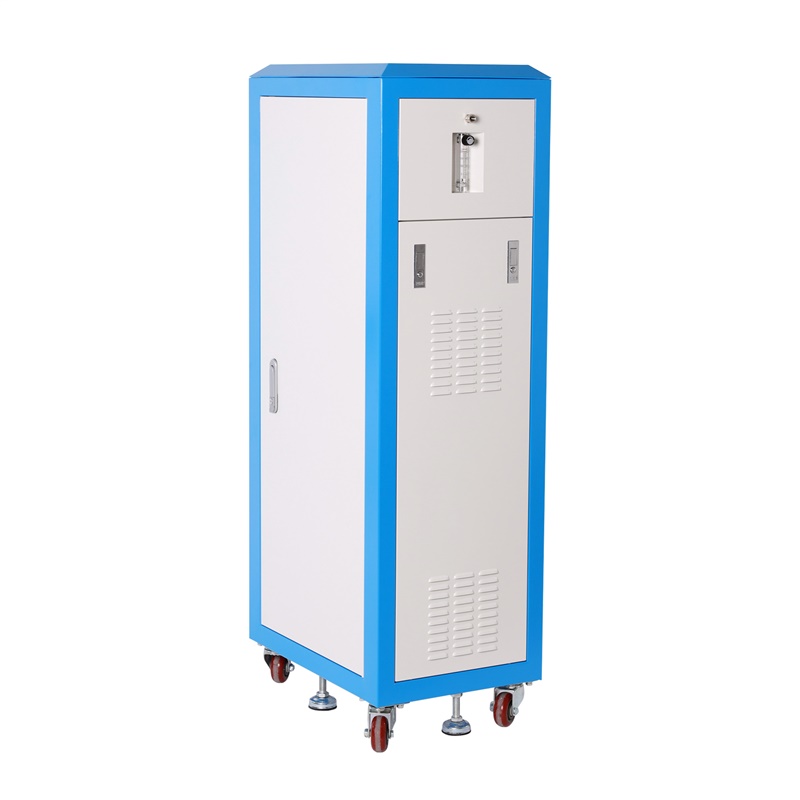
Home oxygen units serve as heavy-duty medical workhorses. They are generally much heavier, typically weighing between 30 and 50 lbs. Because of their powerful internal compressors, they require a dedicated standard wall outlet to operate. You cannot run these on battery power for routine daily use.
They excel in delivery capacity. Stationary machines provide high-volume continuous flow, capable of pushing up to 10 to 15 Liters Per Minute (LPM). They deliver this constant stream regardless of your breathing pattern. These units work best for patients needing oxygen during sleep. Doctors frequently pair them with CPAP or BiPAP machines for sleep apnea patients. They also perfectly suit homebound individuals or anyone carrying a high flow-rate prescription.
A Portable Oxygen Concentrator gives active users their lives back. Manufacturers engineer these devices specifically for mobility. They are remarkably lightweight, usually ranging from 3 to 20 lbs. They run exclusively on rechargeable lithium-ion batteries or car charging adapters.
To conserve battery power, portable units primarily utilize Pulse-Dose delivery technology. They contain sensitive internal sensors. The machine delivers a targeted burst of oxygen only upon inhalation detection. This extends battery life dramatically but offers very limited continuous flow options. They remain best for active users, outdoor travel, and maintaining daily independence. Most modern models proudly carry FAA approval for commercial in-flight use.
Quick Comparison Chart
Feature | Home (Stationary) Units | Portable Units (POCs) |
|---|---|---|
Weight | 30 – 50 lbs | 3 – 20 lbs |
Power Source | Dedicated wall outlet (AC Power) | Rechargeable Lithium-ion batteries |
Delivery Method | Continuous flow (up to 15 LPM) | Pulse-Dose (bursts on inhalation) |
Best Use Case | Overnight sleep, high prescriptions | Travel, active lifestyle, daily errands |
Navigating the medical equipment market feels overwhelming initially. You must ignore flashy marketing features and focus strictly on essential evaluation criteria. Medical compliance, power management, noise, and budget form the foundation of a safe purchase.
Your physical safety relies entirely on medical compliance. The device’s maximum LPM output must meet or safely exceed your doctor's official prescription. We frequently see patients make a common mistake: buying purely based on a machine's ultra-compact size. If an incredibly small device cannot maintain your required blood oxygen saturation during a brisk walk, it poses a severe health hazard. Always prioritize output capacity over aesthetics.
When selecting portable units, you face an unavoidable physical trade-off between weight and battery duration. Lighter POCs weighing under 5 lbs look appealing. However, they typically house much smaller batteries. These micro-batteries often yield only 2 to 4 hours of operation on lower settings.
You can purchase extended batteries offering up to 13 hours of runtime. Be aware they significantly increase the physical weight of the unit. To solve this, look for "hot-swap" top-loading battery designs. This design allows you to eject and replace a dead battery instantly without taking the machine out of its carrying case or turning it off.
Assess the specific decibel ratings before making a final decision. Compressors inherently generate rhythmic thumping and hissing sounds. Noise matters immensely, especially for stationary devices meant for overnight use in your bedroom. Modern units typically operate around 40 decibels, mimicking a quiet refrigerator. Note carefully: older generation or refurbished models may run considerably louder than newer releases.
Acknowledge the high upfront costs associated with respiratory equipment. Premium portable models often retail for $2,000 or more. Discuss your coverage options with your insurance provider early. Medicare occasionally provides coverage, but it requires strict medical qualification and extensive documentation from your pulmonologist. If insurance denies your claim, explore alternative pathways. Medical suppliers often offer flexible financing plans. Purchasing certified reconditioned or refurbished units also helps lower initial costs significantly while maintaining a valid warranty.
Purchasing the equipment represents only the first step. Operating a complex medical device at home requires strict discipline. Implementing robust daily routines prevents equipment failure and physical danger.
Proper daily operation includes critical technical nuances. Follow this sequence strictly to ensure maximum efficiency:
Position the machine exactly 1 to 2 feet away from all walls, curtains, and furniture to ensure adequate ventilation and prevent internal overheating.
Plug the power cord directly into a dedicated wall outlet.
Never use power strips, surge protectors, or extension cords. These machines draw high amperage and easily melt standard household extension cords.
Turn the power switch on and wait. Grant the unit a mandatory 15 to 20-minute warm-up period. It takes time for the molecular sieves to pressurize and allow oxygen purity to peak at 90% or higher.
Attach your humidifier bottle securely if your prescribed continuous flow exceeds 2 LPM.
Connect your nasal cannula or breathing mask, checking the tubing for kinks.
Adjust the dial exactly to your prescribed LPM. Never change this setting without medical authorization.
Lack of hygiene introduces bacteria directly into your lungs. Adhere to a strict, non-negotiable cleaning schedule.
Frequency | Required Maintenance Action |
|---|---|
Weekly | Wash nasal cannulas and face masks using warm water and mild, unscented dish soap. Rinse thoroughly and air dry. |
Every 3 Days | Clean the humidifier bottle. This bottle prevents severe nasal drying on continuous flow. Sanitize it by soaking it in a simple vinegar-water solution for 20 minutes to kill mold. |
Monthly | Remove and wash the exterior gross-particle intake filters. Brush away accumulated dust and pet hair. Ensure they are completely dry before reinserting. |
Annually | Replace internal sieve columns every 12 months, or immediately when prompted by the device's warning alarms. |
You must establish absolute red lines in your home. Pure oxygen acts as a severe fire accelerant. It lowers the ignition temperature of everything around it. Enforce a strict 10-foot distance rule. You must stay 10 feet away from open flames, gas stoves, burning cigarettes, and sparking electronics (like hair dryers or electric blankets).
Furthermore, prepare meticulously for power outages. A grid failure instantly cuts off your air supply if you rely on a home unit. You must keep a backup generator ready or store a 3-day supply of emergency compressed oxygen tanks in a safe, cool location.
Transitioning from research to purchase requires clinical validation. Do not guess your physiological needs based on written product descriptions.
Advise your respiratory therapist to conduct an ambulatory test. Use a pulse oximeter while resting, walking, and sleeping. This verifies your true, dynamic oxygen demands. A machine might keep your saturation at 95% while you watch television, but fail completely when you climb a flight of stairs. Verify these numbers before committing to a specific LPM capacity.
Scrutinize the fine print regarding warranties and vendor support. Check specifically if the supplier offers hot-swap replacement units during repairs. Machines break down. Device downtime poses a severe medical risk. If a vendor requires you to mail your broken machine away for four weeks without providing a temporary loaner, find a different supplier.
Identify your personal lifestyle red flags. Pay close attention to your sleeping habits. If you breathe heavily through your mouth while sleeping, advise your doctor immediately. Standard pulse-dose mechanisms rely on detecting pressure drops in your nasal cavity. If you sleep with your mouth open, the device may not detect the inhalation. It will fail to trigger the vital oxygen burst, leading to dangerous nighttime hypoxia.
An oxygen concentrator stands as a profound, long-term investment in your mobility and health stability. By infinitely converting room air into medical therapy, it eliminates the anxiety of dwindling metal tanks. However, this technology only works optimally provided the device specifications align perfectly with your medical prescription.
Prioritize clinical output and blood oxygen saturation over compact form factors.
Anticipate the daily realities of battery management and weight trade-offs.
Establish a rigid, uncompromising cleaning schedule to protect your respiratory system from bacterial infections.
Enforce the 10-foot fire safety rule strictly within your household.
Take action right now. Compile your target list of devices based on the criteria above. Encourage a frank conversation with your respiratory therapist or pulmonologist about these specific models. Finally, reach out to a certified, reputable medical equipment supplier and ask them to arrange an in-home trial. Testing the machine in your actual living environment remains the single best way to guarantee a successful purchase.
A: Yes. FDA regulations mandate a formal prescription from a licensed physician. The prescription must clearly specify your required flow rate in Liters Per Minute (LPM). It must also dictate whether your condition requires continuous flow or pulse-dose delivery technology.
A: It depends heavily on your breathing habits. Pulse-dose portable units may fail to detect shallow sleep breathing or mouth-breathing. This failure prevents the machine from delivering oxygen. Doctors generally recommend continuous flow or specialized stationary machines for overnight sleep.
A: Continuous flow models deliver a constant, steady stream of oxygen regardless of your breathing patterns. Pulse-dose machines detect your active inhalation and deliver a specific bolus (burst) of oxygen. This targeted delivery significantly saves battery life on lightweight portable units.
A: Battery life varies drastically, ranging from 2 to 13 hours. Duration depends largely on the battery size (standard single versus extended double) and your prescribed flow setting. Operating the machine at higher flow rates depletes lithium-ion batteries exponentially faster.
A: Yes, you can travel by air provided your Portable Oxygen Concentrator explicitly carries official FAA approval. Airlines require you to notify them in advance. You must also bring enough charged battery power to last for 150% of your total expected flight duration.


