

Views: 0 Author: Site Editor Publish Time: 2026-06-13 Origin: Site


Biological storage is a high-stakes environment. A minor temperature excursion ruins more than just a single sample. It compromises years of clinical trial data. It destroys high-value mRNA vaccines. Ultimately, these failures invite severe regulatory penalties. We wrote this guide to move beyond basic definitions. You need a practical, technical evaluation framework. We will clarify exactly what a biomedical freezer is used for. You will discover why standard commercial alternatives fail under strict audits. We also show facility managers how to match technical specifications with their specific laboratory workflows. You can secure your critical biological assets by understanding these precise technical requirements. Securing a reliable storage infrastructure requires careful planning. Regulatory bodies expect flawless temperature mapping. You cannot afford compliance gaps in today's demanding clinical landscape.
Biomedical freezers are purpose-built to maintain strict temperature uniformity (typically -20°C to -86°C) for vaccines, blood plasma, tissues, and reagents.
Regulatory compliance (FDA/CDC guidelines) requires features that standard commercial freezers lack, such as forced-air circulation, cloud-based audit trails, and independent probe access.
Selecting the right unit requires balancing the required temperature range with form factor (upright vs. chest) and cooling technology (direct vs. fan-assisted).
You cannot rely on generalized medical storage claims. Modern laboratories require clinical-grade freezing environments. Specific biological realities dictate these strict parameters. A specialized biomedical freezer preserves volatile materials that would otherwise degrade rapidly at room temperature or in fluctuating cold chains.
Advanced therapeutics require ultra-low temperatures. We typically see requirements ranging from -70°C to -86°C. You must use these extreme environments to preserve mRNA vaccines. The fragile lipid nanoparticles in these vaccines degrade quickly at higher temperatures. DNA and RNA structures also require these deep-freeze conditions. Specialized proteins maintain their complex folding structures only when stored correctly. Without ultra-low temperatures, these high-value therapeutics lose their efficacy completely.
Diagnostic laboratories operate in a different temperature band. They frequently utilize the -30°C to -40°C range. You need this specific environment to store blood plasma safely. Sensitive enzymes and diagnostic reagents also live in this temperature zone. Consistent cooling ensures these materials remain viable for downstream diagnostics. A slight temperature variance can skew a critical patient test. Therefore, precise uniformity is non-negotiable for diagnostic accuracy.
Biobanks preserve cellular integrity over multi-year periods. This long-term archiving demands unparalleled stability. Researchers store stem cells, tumor tissues, and rare genetic samples in these units. The freezer must maintain its set point flawlessly for decades. Any brief warming event creates ice crystals inside the cells. These crystals puncture cell walls and destroy the sample. Purpose-built laboratory freezers prevent this catastrophic cellular damage.
Best Practice: Always segment your storage by access frequency. Place multi-year biobanking samples in dedicated units that users rarely open. This minimizes temperature fluctuations for your most sensitive archives.
Procurement teams often look for cheaper alternatives. They sometimes suggest commercial kitchen units for laboratory use. You must treat this substitution as a massive compliance and security risk. The "good enough" mindset fails under rigorous FDA and CDC audits.
Standard commercial freezers have hidden flaws. They suffer from internal dead zones. The top shelf might be five degrees warmer than the bottom shelf. Furthermore, they exhibit slow temperature pull-down after someone opens the door. These conditions destroy sensitive reagents.
A professional biomedical unit solves these problems. Manufacturers use advanced airflow systems to eliminate dead zones. Many units incorporate VIP (Vacuum Insulated Panel) technology. These panels minimize temperature variance across the entire cabinet. Your samples stay at the exact set point, regardless of their location on the shelf.
Regulatory bodies demand comprehensive data. You must prove continuous compliance. Standard freezers offer zero auditing capabilities. In contrast, clinical-grade models feature robust security frameworks. You can expect the following standard requirements:
Integrated Digital Control Systems: These panels lock set points and feature onboard battery backups.
Audible and Visual Alarms: The system alerts you immediately during a power failure or temperature excursion.
Spark-Free Interiors: Many volatile reagents emit flammable vapors. Spark-free designs prevent catastrophic laboratory fires.
Access Portholes: These dedicated ports allow you to insert independent third-party monitoring probes easily.
Common Mistake: Never rely solely on a freezer's internal display for compliance. Always route a secondary, calibrated probe through the access porthole for independent data logging.
Feature | Standard Commercial Freezer | Professional Biomedical Freezer |
|---|---|---|
Temperature Uniformity | Highly variable (±5°C to ±10°C) | Strictly controlled (±1°C to ±3°C) |
Insulation Technology | Standard polyurethane foam | Advanced VIP (Vacuum Insulated Panels) |
Defrost Cycle | Uncontrolled auto-defrost (spikes temps) | Precision auto-defrost or manual defrost |
Alarm Systems | None or basic local buzzer | Remote, cloud-ready, battery-backed alarms |
Audit Compliance | Fails CDC/FDA standards | Fully compliant with data logging integration |
You must align technical specifications with your facility needs. Procurement teams face structural choices based on available lab space. They must also consider the specific sample type. Here is how you categorize these essential units.
Your biological materials dictate your temperature requirements. You cannot use a one-size-fits-all approach.
-20°C to -40°C (Standard Biomedical Freezers): These units handle routine daily tasks. They are ideal for storing blood plasma. Facilities use them for routine vaccines and daily-use reagents. They utilize standard compressor technologies and require moderate energy input.
-40°C to -86°C (Ultra-Low Temperature / ULT Freezers): These machines operate in an extreme environment. They are mandatory for deep-freeze biobanking. Advanced molecular biology labs rely on them entirely. They often feature cascade refrigeration systems. These dual-compressor setups push temperatures down to the extreme -86°C threshold safely.
The physical shape of your freezer impacts workflow. It also influences temperature stability.
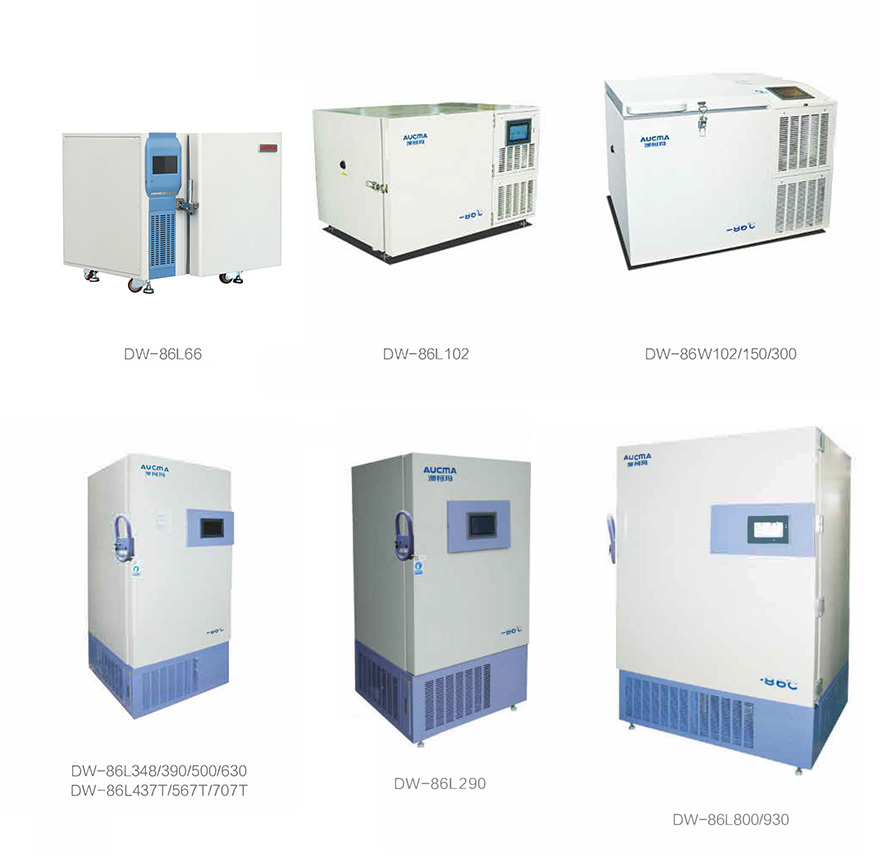
Upright Freezers
These look like traditional refrigerators. They are best for high-frequency access. The vertical design allows for highly categorized storage. You can utilize specialized racks, shelves, and sliding drawers. However, cold air falls. Every time you open an upright door, cold air spills out rapidly. This form factor requires careful capacity planning and swift access protocols.
Chest Freezers
Chest configurations open from the top. They offer superior temperature retention. Since cold air is heavy, it stays pooled inside the cabinet during lid openings. They are the best choice for bulk, long-term storage. You should use chest freezers for archives where daily access is minimal. Their main drawback is a larger floor footprint.
Undercounter Units
Space is a premium in modern facilities. Undercounter units solve tight footprint limitations. You can install them in satellite labs or immediate-use clinical stations. They keep critical daily reagents within arm's reach. They maintain high stability despite their compact compressor size.
You need a skeptical, evidence-based checklist. Evaluating manufacturers requires strict attention to detail. Use the following framework to guide your selection process.
Buyers often miscalculate their required volume. They assume a 500-liter freezer can hold 500 liters of samples. This is a dangerous assumption. A biomedical freezer relies on internal air circulation. You should never load these units past 75% capacity. Tightly packed boxes block the forced-air vents. This blockage creates warm dead zones and strains the compressor. You must scale your purchasing decisions to accommodate this 25% empty-space requirement.
Manufacturers utilize different cooling technologies. You must match the technology to your workflow.
Cooling Technology | Primary Advantages | Operational Trade-offs |
|---|---|---|
Direct Cooling | Maximizes internal capacity. Operates quietly. Excellent temperature stability for long-term storage. | Requires manual defrosting. Ice buildup occurs over time on the interior walls. |
Fan-Assisted (Air-Cooled) | Rapid temperature pull-down after door openings. Features auto-defrost cycles. Maintains highly uniform air. | Higher energy consumption. Auto-defrost cycles must be carefully mapped to avoid sample warming. |
Ultra-Low Temperature units draw significant power. An outdated ULT can consume as much electricity as a small house. You should evaluate modern energy-efficient models. Look for Energy Star certifications. Investigate dual-evaporator efficiencies. Forward-thinking manufacturers now use natural refrigerants. Hydrocarbon refrigerants (like R290) offer superior thermodynamic properties. They reduce environmental impact and lower your carbon footprint simultaneously.
Your hardware must talk to your software. Assess the unit's compatibility with remote monitoring systems. Modern facilities use cloud-based auditing platforms. Ensure the freezer has integrated portholes for third-party probes. Look for smart controllers that export historical data via USB or direct network connections. Seamless data integration prevents manual logging errors.
A high-quality laboratory freezer is a 10-to-15-year investment. ULT models typically last around 10 years due to extreme operational stress. Successful implementation extends far beyond the initial delivery. You must commit to strict maintenance realities. Neglecting these duties leads to catastrophic sample loss.
Ice is the enemy of efficiency. You must execute bi-annual manual defrosting for direct-cooling units. Ice buildup insulates the internal walls poorly. It forces the compressor to run continuously. Furthermore, thick frost pushes against inner doors. This pressure damages the silicone door seals. Broken seals allow ambient humidity inside, which rapidly accelerates further icing.
Compressors generate heat while cooling the cabinet. The condenser system dissipates this heat. Dust and laboratory debris clog the condenser filter over time. You must perform quarterly filter cleaning. A choked condenser causes the compressor to overheat. This is the leading cause of premature mechanical failure in biological storage units. Simply vacuuming the front filter extends the unit's lifespan significantly.
Large cooling units reject significant ambient heat into the room. You cannot place three ULT freezers in a small, unventilated closet. They will quickly overwhelm the local environment. The room temperature will spike. The freezers will then work harder to pull down their internal temperatures, generating even more heat. You must plan for adequate facility HVAC support. Ensure proper clearance around the back and sides of the unit for optimal airflow.
Best Practice: Always maintain a minimum clearance of 6 to 8 inches behind and above the unit. This gap allows the hot exhaust air to escape easily into the room's return ducts.
Purchasing professional cooling equipment is fundamentally a risk-mitigation exercise. You are protecting irreplaceable biological assets. The meticulous selection process is justified by guaranteed sample security, strict regulatory compliance, and complete audit-readiness.
To move forward successfully, take the following action-oriented steps:
Audit Current Capacity: Calculate your existing sample volume and apply the 75% capacity rule to determine your true space requirements.
Define Exact Temperatures: Map out the strict temperature thresholds required for your specific vaccines, reagents, or cell lines.
Consult Specialists: Work closely with facility engineers to calculate ambient heat loads and HVAC requirements before shortlisting vendors.
Establish Maintenance SOPs: Draft standard operating procedures for quarterly filter cleaning and bi-annual defrosting prior to installation.
A: Direct cooling utilizes internal cold walls. It offers high capacity and stable long-term temperatures but requires manual defrosting. Fan-assisted units use forced air circulation. They provide fast temperature recovery after door openings and feature auto-defrost capabilities, though they generally consume more energy.
A: A standard laboratory freezer typically lasts 10 to 15 years. Ultra-low temperature (ULT) models average about 10 years. This lifespan depends heavily on your maintenance habits. Routine condenser filter cleaning and regular manual defrosting are critical to preventing premature compressor failure.
A: Standard commercial freezers lack CDC and FDA compliance. They suffer from internal temperature dead zones and slow recovery times. Furthermore, they do not have emergency battery backups, access portholes for external probes, or the strict digital alarm systems required to protect high-value biological samples.


