

Views: 0 Author: Site Editor Publish Time: 2026-07-17 Origin: Site


Vaccine spoilage due to improper temperature control carries massive financial and public health consequences. Each year, compromised doses waste millions of dollars globally. Worse, administering degraded vaccines leaves vulnerable patients unprotected against preventable diseases. To combat this, organizations like the CDC and the Vaccines for Children (VFC) program enforce increasingly strict compliance guidelines. They mandate rigorous cold chain management protocols to guarantee absolute efficacy. Healthcare facilities can no longer rely on outdated or generic refrigeration methods.
This article serves as a definitive evaluation guide for healthcare administrators, pharmacists, and lab managers. You will discover how to evaluate purpose-built cold chain hardware for your exact clinical needs. We will also analyze mobile transport solutions and robust emergency backup systems. By understanding these technologies, you can confidently protect your inventory and maintain unwavering regulatory compliance.
Purpose-built vaccine freezers are a strict compliance requirement; household or dorm-style units introduce unacceptable financial and regulatory risks.
Effective cold chain management requires distinct hardware solutions for stationary storage versus mobile transport.
Grid instability and emergency transport scenarios dictate the need for integrated backup systems, phase change materials (PCM), or solar direct drive technology.
Procurement decisions should be based on Total Cost of Ownership (TCO), Digital Data Logger (DDL) compatibility, and scalability for large collections.
Regulatory bodies leave no room for compromise regarding medical storage. The CDC and VFC guidelines explicitly prohibit commercial or dormitory-style combination fridge/freezers. These household models rely on cold walls and localized cooling. They inevitably create dangerous freezing spots and warm zones. Utilizing them introduces severe compliance failures and direct patient safety risks.
You must invest in specialized hardware. A dedicated cold chain storage freezer features fundamentally different engineering. Manufacturers design these units specifically for biological preservation.
Microprocessor Controls: Digital sensors react instantly to minute temperature fluctuations.
Forced-Air Circulation: Internal fans distribute cold air evenly across all shelving levels.
Specialized Compressor Cycling: Advanced compressors quickly restore temperatures after door openings.
These architectural differences directly mitigate risk. Purpose-built units prevent temperature excursions and eliminate thermal stratification. They also resist internal frost buildup. By deploying compliant hardware, you protect your facility from the massive liability of administering compromised doses.
Feature | Dormitory / Commercial Style | Purpose-Built Medical Model |
|---|---|---|
Temperature Distribution | Uneven (Cold walls, warm doors) | Uniform (Forced-air circulation) |
Temperature Recovery | Slow recovery after door openings | Rapid pull-down via smart compressors |
Regulatory Compliance | Strictly Prohibited by CDC/VFC | Fully Compliant and Recommended |
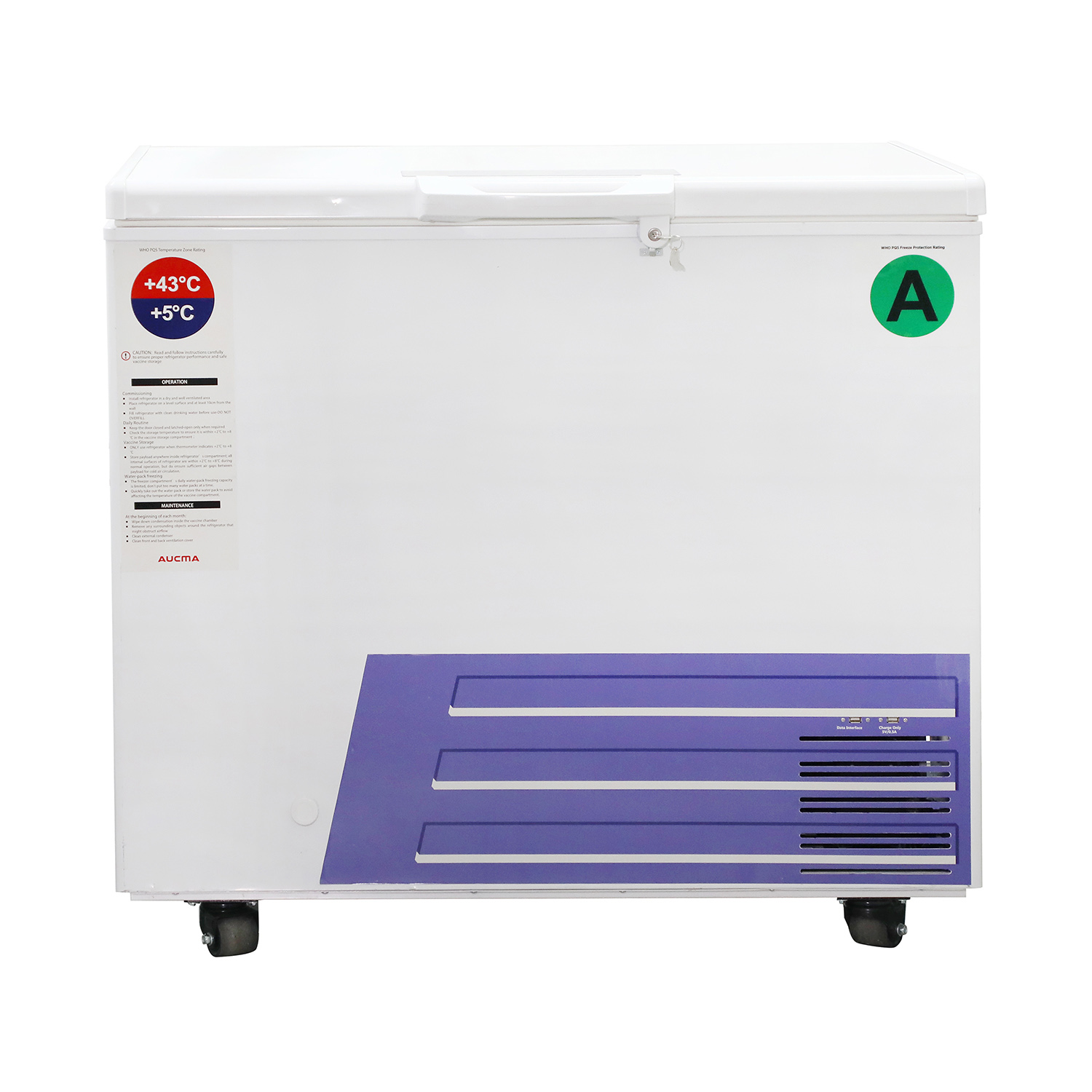
Different clinical environments demand specific hardware configurations. You cannot apply a universal approach to medical refrigeration. Administrators must match equipment specifications to their daily operational realities.
Central pharmacies, large public health clinics, and state departments manage massive biological collections. They require robust stationary units designed for high-volume access.
When selecting a stationary vaccine freezer, evaluate the following criteria:
Spatial Footprint: Ensure the external dimensions fit designated alcoves while allowing adequate ventilation clearance.
Shelving Configurations: Look for perforated shelving to maximize internal airflow around tightly packed inventory.
Pull-Down/Recovery Times: Review technical specifications detailing how fast the unit recovers after a one-minute door opening.
Off-site clinics, mobile health initiatives, and rapid emergency relocation teams face distinct challenges. They move inventory across unpredictable environments. Mobile operations demand ruggedized solutions.
Evaluate transport hardware using these specific metrics:
Weight and Ergonomics: Staff must safely lift and maneuver the unit during field deployments.
Durable Chassis Construction: The exterior must withstand drops, bumps, and constant movement.
Vibration Resistance: Compressors must survive transit without mechanical failure or fluid leaks.
Continuous Active Cooling: Ensure strict compatibility with 12V and 24V DC auxiliary vehicle power sources.
Specialized mRNA vaccines and specific genetic samples require extreme freezing conditions. Standard medical refrigeration cannot reach or hold these profiles. ULT systems utilize specialized cascade refrigeration mechanics.
When implementing ULT solutions, you must evaluate facility infrastructure. These units pull significant electrical loads. They also reject considerable heat into the surrounding room. You must calculate the HVAC load impact to prevent ambient overheating.
Power outages and natural disasters remain primary drivers of catastrophic biological loss. A reliable power grid is never a guarantee. Hurricanes, winter storms, and rolling blackouts frequently compromise clinical facilities. You need robust hardware designed for worst-case scenarios.
Modern medical freezers integrate secondary systems to maintain safe temperatures during grid failures. Battery backups provide temporary active cooling. Additionally, manufacturers incorporate phase change materials (PCM). These thermal ballasts absorb heat energy slowly. They maintain a stable internal climate even when compressors lose power.
In regions facing chronic power instability or extreme remoteness, alternative technologies excel. A solar direct drive freezer operates independently of traditional electrical infrastructure. This technology provides an ideal solution for off-grid clinics and disaster relief zones.
The mechanism is brilliantly straightforward. It uses direct solar energy to freeze a thick water or antifreeze lining inside the cabinet walls. This frozen lining acts as massive thermal storage. It eliminates the need for vulnerable, expensive battery banks. It maintains strict cold chain compliance through nights and heavily clouded days.
Hardware alone cannot guarantee safety during transit. The most vulnerable phase of cold chain management occurs during transitions. Moving sensitive inventory from a stationary unit to a transport vessel introduces massive risk. Staff must execute these handoffs flawlessly.
Compliant emergency retrieval requires strict Standard Operating Procedures (SOPs). You must establish formal emergency pack-out protocols before a crisis occurs.
Effective pack-out plans include:
Conditioned Coolants: You must properly condition frozen ice packs before packing to prevent localized freezing of nearby vials.
Insulating Materials: Utilize specific bubble wrap or hard plastic dividers to separate inventory from direct coolant contact.
Defined Roles: Assign designated staff members to execute the pack-out rapidly.
Furthermore, continuous monitoring remains non-negotiable. Digital data loggers (DDLs) must travel alongside the biological assets. A DDL featuring a buffered probe provides an unbroken, auditable temperature history. It confirms the payload arrived safely and remained viable throughout the entire journey.
Procuring specialized refrigeration requires comprehensive facility analysis. Decision-makers must look beyond upfront sticker prices. You must evaluate how new hardware integrates into your existing clinical environment.
Facility Infrastructure Alignment
Never purchase hardware without auditing your physical space. You must verify spatial constraints and doorway clearances. Check ambient room temperatures, as excessive heat impairs compressor efficiency. Crucially, audit your electrical panels. Medical refrigeration demands dedicated electrical circuits. Sharing circuits causes tripped breakers and devastating power losses.
Vendor Support and Service Level Agreements (SLAs)
Hardware eventually requires maintenance. Evaluate the manufacturer’s support infrastructure closely. Analyze their guaranteed response times for emergency repairs. Ensure replacement parts remain readily available domestically. Additionally, confirm they provide ongoing calibration certifications required by regulatory inspectors.
Next Steps
We recommend a systematic approach for procurement teams. First, conduct a thorough facility power and space audit. Next, request a custom cold chain assessment from reputable vendors. Finally, review all manufacturer specification sheets against your local health department requirements.
Investing in specialized cold chain infrastructure serves as a fundamental pillar of risk management. It directly impacts clinical outcomes and patient safety. Cutting corners on medical refrigeration inevitably leads to compromised inventory and regulatory penalties.
Purpose-built cold chain hardware is a strict regulatory requirement for clinical environments.
Stationary, mobile, and ultra-low temperature units fulfill distinctly different operational needs.
Off-grid technologies and thermal ballasts provide essential protection against power instability.
Successful transit requires merging robust transport hardware with strict pack-out protocols.
Ultimately, decision-makers must view proper hardware as an insurance policy. The initial cost of compliant equipment remains fractional compared to the operational disruption of a single catastrophic excursion.
A: Purpose-built units utilize precise microprocessor controls. They feature forced-air cooling systems to eliminate internal temperature gradients. They also maintain strict temperature uniformity tolerances. These elements prevent warm or freezing spots, ensuring every vial remains safe.
A: Yes. A qualified unit meets WHO PQS prequalification standards. It uses solar energy to freeze a thermal reservoir, often an antifreeze lining. This thermal storage bridges night-time or cloudy operations seamlessly. It provides reliable, compliant cooling without requiring conventional battery banks.
A: Hold times vary significantly. They depend on ambient room temperature and unit insulation thickness. The integration of phase change materials (PCM) also extends this duration. High-quality units can maintain safe ranges for several hours to over a day. You should always verify specific manufacturer hold-time testing data.
A: Many modern freezers include built-in monitoring displays. However, external CDC-compliant DDLs are often required. You need them for independent auditing and compliance. These external loggers use buffered probes embedded in glycol. They travel directly alongside your vials during transport.


