

Views: 0 Author: Site Editor Publish Time: 2026-07-13 Origin: Site


Millions of dollars in biologic inventory rely on precise temperature control. Critical public health outcomes depend on this exactness every single day. Regulatory bodies like the CDC, VFC, and AAP have tightened storage compliance strictly over recent years. They render legacy residential or dormitory-style freezers entirely obsolete. Using these outdated units creates unacceptable risks for patient safety and facility budgets.
We designed this guide to help you navigate these strict regulatory requirements. We provide procurement teams, lab managers, and pharmacy directors with an evidence-based framework. You can use it to evaluate, shortlist, and purchase the correct cold storage infrastructure. We break down the technical specifications you actually need to understand. You will learn how to match equipment to your specific facility size and workflow. By the end of this guide, you will know exactly how to safeguard your sensitive biologics effectively.
Purpose-Built is Mandatory: Household units lack the microprocessor controls and forced-air circulation required for CDC/VFC compliance.
Identify Your Temperature Profile: Needs vary drastically between standard biologics (-15°C to -50°C) and mRNA/specialty formulations requiring a deep freezer for vaccines (Ultra-Low, -86°C).
Continuous Monitoring is Non-Negotiable: Integrated or compatible Digital Data Loggers (DDLs) are required for audit trails and excursion alerts.
Space vs. Performance: While a pharmacy refrigerator with freezer saves space, independent, standalone units offer superior temperature stability.
Purchasing cold storage equipment requires viewing the equipment as a risk management tool. A single failure can compromise hundreds of doses, putting public health at risk. Success means achieving zero temperature excursions, passing every audit, and maintaining complete confidence in sample integrity.
Non-compliance carries devastating financial and operational consequences. Temperature excursions often force clinics to discard entire batches of inventory. A single discarded batch can represent tens of thousands of dollars in lost revenue. Furthermore, failed Vaccines for Children (VFC) audits disrupt operations severely. When auditors find inadequate storage, they suspend supply shipments immediately. Facilities must then scramble to borrow equipment or redirect patients to other providers. This damages institutional reputation and breaks community trust.
The Centers for Disease Control and Prevention (CDC) and the American Academy of Pediatrics (AAP) set the absolute baseline for cold storage. You cannot compromise on these foundational requirements. Facilities must implement units featuring microprocessor-based temperature controls. Traditional mechanical thermostats simply drift too much to remain safe.
Additionally, guidelines mandate fan-forced air circulation. Fans push cold air evenly throughout the cabinet, eliminating dangerous hot spots. The CDC strictly prohibits dormitory-style units under all circumstances. These small, single-door units with internal freezer compartments fluctuate wildly every time you open the door.
Buyers must look past flashy marketing jargon. Many manufacturers label their products as "medical-grade" without backing up the claim. You must demand verifiable proof. Look for ISO 13485 certifications, which demonstrate a manufacturer's commitment to medical device quality management. Always request third-party calibration certificates. Authentic purpose-built units arrive with documentation proving they hold specific temperature ranges under rigorous testing conditions. If a vendor cannot provide this documentation, you should evaluate other options.
Selecting the right equipment means understanding your daily workflow and specific vaccine types. Over-purchasing wastes space, while under-purchasing creates stability risks. Below is a breakdown of the primary solution categories available to healthcare facilities.
Storage Capability Comparison
Equipment Type | Temperature Range | Primary Application | Key Advantage |
|---|---|---|---|
Standalone Freezer | -15°C to -50°C | Standard viral vaccines (MMR, Varicella) | High thermal stability and rapid recovery |
Ultra-Low Temperature (ULT) | -50°C to -86°C | mRNA vaccines, Ebola vaccines | Essential for deep-freeze protocols |
Combination Unit | Variable by compartment | Low-volume outpatient clinics | Maximizes floor space footprint |
A standalone vaccine freezer represents the gold standard for standard viral vaccines like Varicella and MMR. These units dedicate their entire compressor and cabinet design to a single temperature range. Because they only do one job, they offer incredibly high stability. When staff members open the door, these units recover their set temperatures rapidly. The primary drawback involves space. They require dedicated floor space, which can prove challenging for cramped pharmacy backrooms.
Next-generation mRNA vaccines, Ebola vaccines, and specific laboratory biologics require extreme cold. A true deep freezer for vaccines handles these demanding ultra-low temperature requirements. These units are absolutely essential for strict deep-freeze protocols. However, they come with unique facility challenges. They consume significantly more energy than standard units. They also exhaust substantial heat into the surrounding room, often requiring specialized HVAC upgrades to prevent ambient overheating.
Small-footprint clinics or outpatient pharmacies often struggle to find room for two separate appliances. A pharmacy refrigerator with freezer solves this spatial challenge. These combination units accommodate low-volume storage needs perfectly.
We must issue a crucial warning here. Buyers should only evaluate combination units featuring dual compressors and separate, dedicated thermostats. Many cheaper combo units use a single shared compressor to cool both the refrigerator and the freezer. These shared-compressor units frequently fail CDC compliance tests. Cold air bleeds between compartments, causing devastating temperature fluctuations. Always verify dual-compressor architecture before signing a purchase order.
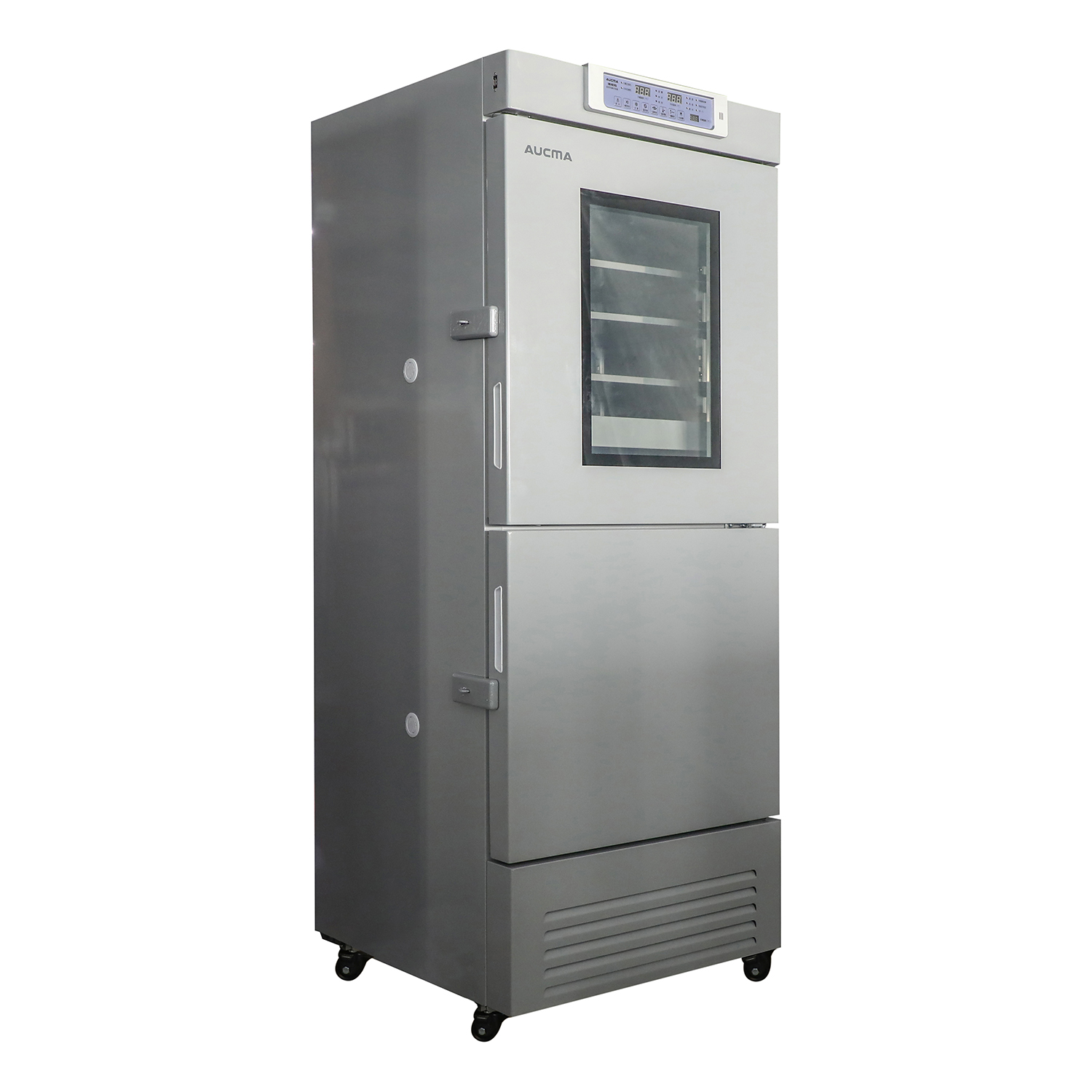
Once you select a category, you must evaluate specific unit features. We recommend prioritizing clinical outcomes over aesthetic bells and whistles. Use the following criteria to rank your short-listed units.
Analyze Temperature Uniformity: Check peak variation metrics across all shelves.
Assess Recovery Speeds: Review data on how fast the unit recovers after door openings.
Verify DDL Integration: Ensure the unit supports buffered probes.
Audit Security Measures: Confirm the presence of adequate physical and digital locks.
Determine Defrost Needs: Decide between manual and automatic defrost based on your maintenance capacity.
Uniformity dictates that a vial stored on the top shelf experiences the exact same temperature as a vial on the bottom shelf. You should look for peak variation metrics demonstrating a tight ±1°C to ±2°C variance. Furthermore, evaluate how quickly the unit recovers its set temperature after a 30-second door opening. In busy clinics, staff open these doors dozens of times per day. Sluggish recovery times leave inventory vulnerable to warming.
Continuous monitoring prevents silent failures. Your chosen unit must feature a buffered temperature probe. These probes sit submerged in a vial of glycol or glass beads. This buffer simulates the actual temperature of the liquid vaccine inside the vial. Unbuffered probes only measure ambient air, triggering false alarms every time someone opens the door. Required alerts must include out-of-range warnings, door ajar notifications, power failure alerts, and low battery indicators.
Biologics represent highly valuable assets. You must evaluate physical locks, electronic keypads, and user-level access tracking. Advanced units log exactly who opened the door and when they did it. This tracking prevents unauthorized handling and helps investigate temperature excursions. If a unit warms up overnight, access logs reveal if a staff member left the door slightly ajar at the end of their shift.
Buyers must choose between manual and auto-defrost configurations. Manual defrost freezers generally offer better overall temperature stability. They do not utilize internal heating coils to melt ice. However, they require strict, labor-intensive maintenance protocols. Staff must empty the unit and manually melt the ice buildup periodically. Auto-defrost units save immense labor hours but require careful evaluation. You must ensure the unit's automatic defrost cycle does not cause dangerous temperature spikes in the storage cabinet during the melting phase.
Buying the equipment represents only the first step. Installing it correctly dictates how well it will perform over its lifespan. Facility infrastructure plays a massive role in equipment longevity.
You must assess physical clearance requirements before delivery. Medical refrigeration units require specific breathing room. If you push a unit flush against a back wall or cram it into a tight alcove, it will overheat. The compressor will work twice as hard to dissipate heat, drastically reducing its operational lifespan. Always measure your space and adhere to the manufacturer's ventilation guidelines.
Grid power fails unpredictably. You must evaluate your facility's backup systems. Specify units proven compatible with hospital generator load curves. When generators kick on, they sometimes deliver power spikes. Your equipment must handle these surges safely. For smaller clinics lacking whole-building generators, look for units equipped with robust integrated battery backups. These batteries keep the DDL running during an outage, ensuring you maintain an unbroken audit trail.
Refrigeration removes heat from the inside of the cabinet and dumps it into the surrounding room. Discuss the expected heat output of your chosen freezers with your facilities team. Placing multiple ULTs or standard units into a small pharmacy requires dedicated HVAC adjustments. If the room gets too hot, the freezers cannot cool themselves efficiently. This leads to premature compressor failure and dangerous internal temperature rises.
Public health demands fluctuate. You must plan capacity for routine flu seasons or sudden pandemic responses. However, avoid over-purchasing cubic footage. An empty freezer actually struggles to maintain thermal stability more than a full one. Biologics hold cold mass, helping stabilize the cabinet. If you buy a massive unit and leave it 80% empty, the air dumps out rapidly upon opening. Buy modular units you can scale, rather than a single oversized cavern.
The vendor you choose matters just as much as the hardware itself. Cold storage equipment requires ongoing partnership to ensure continuous compliance and functionality.
Examine the warranty structure closely. Compressors represent the most common point of failure in cold storage. Look for multi-year compressor warranties specifically. Additionally, assess the vendor's availability for rapid-response maintenance. Ask for defined Service Level Agreement (SLA) times. If your unit fails on a Friday evening, you need to know if a technician will arrive within four hours or if you must wait until Monday morning. Slow service response guarantees lost inventory.
Regulatory bodies demand proof of performance. Verify if your chosen vendor provides NIST-traceable calibration certificates upon delivery. These documents prove the internal sensors read accurately against global standards. Furthermore, determine if the vendor offers IQ/OQ/PQ support. Installation Qualification, Operational Qualification, and Performance Qualification protocols ensure the unit operates perfectly within your specific facility environment. Vendors supplying these validation services save your internal team weeks of difficult regulatory paperwork.
Purchasing a purpose-built medical freezer acts as a direct investment in facility risk management. The initial research and procurement effort pales in comparison to the operational nightmare of a failed audit or discarded inventory. We urge you to prioritize CDC-compliant, microprocessor-controlled units over cheaper residential alternatives to prevent catastrophic losses.
Take immediate action by auditing your current storage capacity. Check the data logs on your existing units to identify any lingering stability issues. If you notice wide temperature swings or outdated equipment, contact a specialized vendor for a site-specific unit sizing assessment today.
A: No. Household units lack fan-forced air circulation, leading to severe hot and cold spots. The CDC expressly advises against them, even with a DDL attached. They cannot maintain the strict temperature uniformity required for biologic integrity.
A: Primarily for mRNA vaccines and specific biologics that require ultra-low temperatures (typically between -50°C and -86°C). Standard viral vaccines generally require temperatures between -15°C to -50°C. Always consult the specific manufacturer guidelines for your inventory.
A: Only if they are purpose-built "medical-grade" units featuring two separate compressors and independent temperature controls for each compartment. Standard residential combo units share a compressor and are not compliant due to severe temperature bleeding.
A: A DDL sensor submerged in a vial of liquid (like glycol) or glass beads. It simulates the actual temperature of the vaccine liquid rather than reacting to sudden changes in air temperature when someone opens the cabinet door.


