

Views: 0 Author: Site Editor Publish Time: 2026-07-09 Origin: Site


Selecting a cold storage unit goes far beyond a basic hardware purchase. You must treat it as a critical risk-management decision. A single temperature excursion ruins valuable biologics instantly. This failure often costs clinics thousands of dollars in lost inventory. It also directly compromises patient safety and trust. Biologic storage requirements grow more complex every year. We now face strict CDC guidelines. Newer vaccines demand highly distinct thermal profiles. Navigating these rules requires absolute precision. Standard commercial appliances simply cannot meet these rigorous demands. This guide provides a practical, compliance-focused framework. You will learn how to evaluate purpose-built cold storage effectively. We will help you select equipment designed to protect your inventory. You can meet strict regulatory standards with total confidence.
Purpose-built vaccine freezers are non-negotiable for compliance; household or dormitory-style units are explicitly discouraged by the CDC.
Selection should be driven by specific temperature range requirements (e.g., -20°C vs. -86°C) and the volume of maximum inventory at peak times.
Key performance indicators for evaluation include temperature uniformity, post-door-opening recovery time, and integrated continuous monitoring.
Facility infrastructure—including HVAC capacity, electrical redundancy, and floor space—must be audited before finalizing a purchase.
Cold chain failure brings severe and immediate consequences. You lose valuable medical inventory in a matter of hours. The financial hit hurts clinic budgets deeply. Worse, you might unknowingly administer compromised doses to patients. This mistake triggers mandatory revaccination protocols immediately. Revaccination destroys patient trust and damages your clinical reputation. Facilities also face immense regulatory risks. You can easily lose your Vaccines for Children (VFC) provider status. Losing this status devastates pediatric practices.
Compliance requires an unyielding baseline of operational standards. You must reference the CDC’s "Pink Book" Chapter 5 carefully. It outlines non-negotiable requirements for strict temperature control. Standard commercial or residential units fail these requirements completely. Why do household appliances fail? Standard units use fluctuating, slow cooling cycles. They create dangerous cold spots near the back vents. They leave warm spots near the front doors. Purpose-built engineering is absolutely required to protect fragile biologics. A reliable vaccine cold chain freezer solves these inherent structural problems. It delivers uniform cooling continuously. It prevents localized freezing and ensures total storage safety.
You must match your equipment perfectly to your biologic payload. Different formulations need distinct thermal environments to remain viable. We break down the available solutions into two core categories. You base this choice entirely on your specific inventory types.
Standard units maintain temperatures strictly between -15°C and -50°C. You will use a standard vaccine freezer for traditional frozen formulas. A common example is the Varicella vaccine. These units handle daily clinical storage loads effectively. They provide stable environments for most established pediatric immunizations.
Ultra-low options serve highly specialized medical use cases. A medical deep freezer operates safely between -50°C and -86°C. You need this extreme environment for modern mRNA vaccines. Specialized viral vectors also require these ultra-low temperatures. These machines use advanced insulation and heavy-duty compressors to sustain extreme cold.
Proper sizing requires careful mathematical logic. Do not guess your daily storage needs. Always calculate your maximum peak inventory volume first. Flu season typically represents this maximum peak for most clinics. Once you determine this volume, leave a 30% to 50% buffer. This extra space is never wasted. It ensures adequate internal airflow throughout the cabinet. Cramped cabinets restrict air circulation drastically. Poor circulation causes dangerous temperature spikes and degrades uniformity.
Equipment Category | Operating Range | Common Biologic Applications | Buffer Space Recommendation |
|---|---|---|---|
Standard Frozen | -15°C to -50°C | Varicella, MMRV, Zoster | 30% - 50% |
Ultra-Low Temperature | -50°C to -86°C | mRNA formulas, Viral vectors | 30% - 50% |
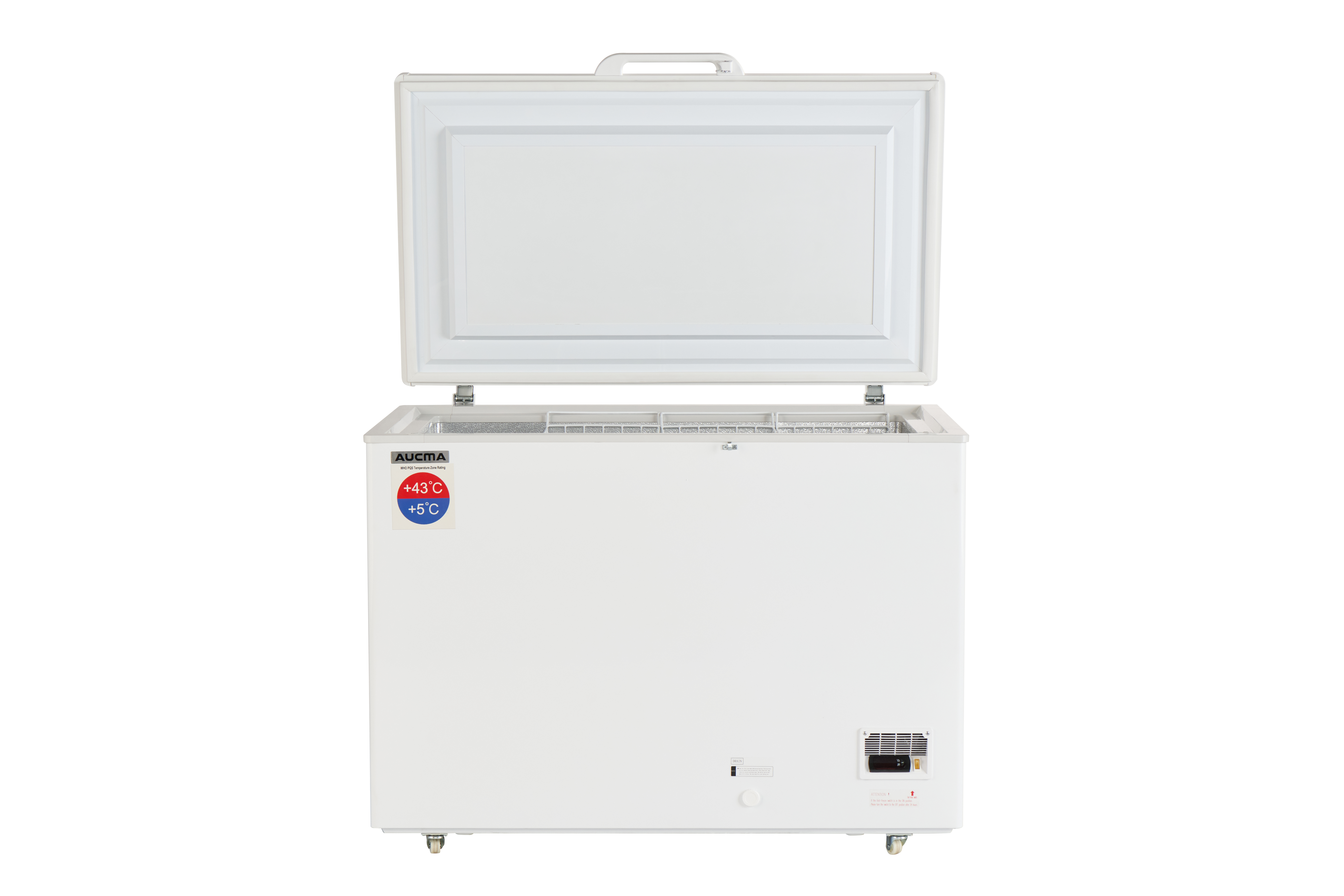
High-end features must translate directly into tangible storage outcomes. Temperature uniformity serves as your primary evaluation metric. Forced-air circulation systems actively prevent hot or cold spots. They push cold air evenly throughout the entire cabinet. Every single shelf remains perfectly stable at all times. Next, you must rigorously assess pull-down and recovery times. Clinics experience very busy shifts daily. Staff open cabinet doors frequently to retrieve doses. You must know how quickly the unit restores target temperatures. Fast recovery prevents thermal shock to your inventory. Slow recovery puts every vial at massive risk.
Digital monitoring requires modern, integrated technological solutions. You need built-in Digital Data Loggers (DDLs). These loggers must always use buffered probes. Glass beads or glycol buffers mimic the actual vial properties. They measure the core sample temperature accurately. They do not merely read fluctuating ambient air. This distinction remains crucial for CDC compliance.
Finally, evaluate the defrost mechanisms carefully before purchasing. Auto-defrost systems offer excellent convenience for busy staff. However, they use brief internal heating cycles. You must assess how these cycles affect internal temperatures. Manual defrost units provide unmatched overall temperature stability. They never run internal heating elements near your inventory. The primary downside involves more manual labor. You will require secondary storage during the defrosting maintenance routine.
Hardware components eventually fail under continuous stress. You must build redundancy into your entire setup. Redundancy prevents minor failures from becoming complete financial disasters. Modern systems feature robust dual-compressor architectures. If one compressor stops working, the second instantly takes over. This safeguard maintains safe temperatures seamlessly. It buys your team valuable time to arrange professional repairs.
Power failure resilience represents another absolutely critical safeguard. Grid outages happen often and entirely without warning. Your monitoring systems must feature dedicated battery backups. External alarms must still fire during a total grid blackout. If you cannot hear the alarm, you lose the inventory. The battery ensures continuous data logging as well. You will know exactly what temperatures occurred during the entire outage.
Physical security demands your full attention too. You must prevent unauthorized access to expensive biologics. Modern units offer advanced access control options to assist you.
Biometric Locks: Provide the highest level of physical security by scanning fingerprints.
Keycard Access: Restrict entry to authorized personnel only.
Digital Audit Trails: Document the precise chain of custody automatically.
Remote Alerts: Send SMS notifications if a door remains ajar.
You can review exactly who opened the door and when. This documentation proves invaluable during routine compliance audits.
Procuring the right equipment represents only the first step. You must verify your facility readiness immediately. These specialized machines generate significant ambient heat. You must evaluate your HVAC and heat rejection capabilities. Can your current HVAC system handle an additional thermal load? Medical units push hot air out to keep the interior cold. A small, poorly ventilated room will overheat quickly. This ambient heat strains the unit's compressor severely and shortens its lifespan.
Electrical infrastructure requires a thorough professional audit. You absolutely need dedicated electrical circuits for each machine. Sharing circuits with other appliances causes frequent tripped breakers. You cannot risk a microwave shutting down your biologic storage. Verify your emergency generator connections as well. Ensure the unit plugs into a generator-backed outlet directly.
The best equipment still fails without proper operational habits. Staff adoption makes or breaks your compliance record. You must establish strict Standard Operating Procedures (SOPs). Written guidelines eliminate confusion during stressful emergency situations.
Schedule regular DDL calibration routines according to manufacturer guidelines.
Enforce strict door-opening time limits to minimize thermal loss.
Document emergency transfer protocols for prolonged power outages.
Maintain clear spacing around the unit for proper heat dissipation.
Staff must practice these protocols regularly. Human error remains a leading cause of preventable inventory loss.
Reliable cold storage merges compliant hardware with rigorous facility preparation. You cannot rely on equipment alone. Start your selection with a logical shortlisting process. First, audit your peak inventory volume accurately. Second, define your required temperature ranges based on biologic types. Third, assess your facility constraints regarding power and physical space. Finally, request specific vendor validation data, like temperature uniformity mapping. Do not guess on regulatory compliance. Consult with cold-chain specialists today. Request technical specification sheets and map them against your specific requirements. Take decisive action now to secure your biologics and protect your patients.
A: The CDC strictly prohibits single-compressor dormitory units. However, purpose-built medical-grade combination units are acceptable if they feature dual, independent compressors. Despite this, dedicated standalone units remain the preferred choice for maximum temperature stability.
A: Industry standards require calibration testing every one to two years. You must always calibrate in accordance with the manufacturer's Certificate of Calibration testing expiration date to maintain strict regulatory compliance.
A: The standard CDC recommendation requires you to maintain temperatures strictly between -50°C and -15°C (-58°F and +5°F).
A: Keep the doors closed immediately to utilize the cabinet's insulation. Monitor the DDL continuously via its battery backup. If temperatures approach out-of-range thresholds, execute your facility's documented emergency relocation SOP right away.


